


Introduction
Artificial Intelligence (AI) is rapidly changing the healthcare industry. From faster disease diagnosis to personalized treatment plans, AI is helping doctors, hospitals, and researchers improve patient care and medical efficiency. In 2026, healthcare organizations around the world are increasingly using AI-powered technologies to deliver better outcomes and reduce healthcare costs.
Understanding how artificial intelligence is transforming healthcare can help patients, medical professionals, and businesses prepare for the future of medicine.
What Is Artificial Intelligence in Healthcare?
Artificial intelligence in healthcare refers to the use of computer systems and machine learning technologies to analyze medical data, assist doctors, automate tasks, and improve decision-making.
AI systems can process large amounts of information quickly and identify patterns that may be difficult for humans to detect. These technologies are improving healthcare services in many areas, including diagnosis, treatment, patient monitoring, and drug development.
1. Faster and More Accurate Disease Diagnosis
One of the biggest benefits of AI in healthcare is improved disease detection. AI-powered systems can analyze medical images, lab results, and patient records with high accuracy.
Examples of AI Diagnosis Tools
- Detecting cancer from X-rays and scans
- Identifying heart disease risks
- Diagnosing neurological disorders
- Predicting chronic illnesses
AI helps healthcare professionals make faster decisions, which can lead to earlier treatment and better patient outcomes.
2. Personalized Treatment Plans
Every patient is different, and AI is helping doctors create customized treatment strategies based on individual health data.
How AI Supports Personalized Medicine
- Analyzes patient history
- Tracks genetic information
- Recommends targeted treatments
- Predicts treatment effectiveness
Personalized healthcare improves the chances of successful treatment while reducing unnecessary medications and side effects.
3. AI-Powered Virtual Health Assistants
Virtual assistants and AI chatbots are becoming common in healthcare systems. These tools help patients access medical information and basic support anytime.
Benefits of AI Health Assistants
- 24/7 patient support
- Appointment scheduling
- Medication reminders
- Symptom checking
- Health monitoring
AI assistants improve convenience and reduce pressure on healthcare staff.
4. Improved Medical Research and Drug Development
Developing new medicines traditionally takes years and costs billions of dollars. AI is helping researchers speed up the process by analyzing huge datasets efficiently.
AI in Medical Research
- Discovering potential drug compounds
- Predicting drug effectiveness
- Analyzing clinical trial data
- Accelerating vaccine development
AI played a major role in advancing medical research and improving global healthcare innovation.
5. Better Hospital Management
Hospitals use AI to improve operations, reduce errors, and optimize resources.
Areas AI Improves in Hospitals
- Patient scheduling
- Predicting hospital admissions
- Managing medical records
- Reducing administrative workload
- Monitoring patient conditions
These improvements help healthcare facilities operate more efficiently while delivering better care.
6. Remote Patient Monitoring
Wearable devices and AI-powered monitoring systems allow doctors to track patient health remotely.
Common AI Monitoring Devices
- Smartwatches
- Fitness trackers
- Blood pressure monitors
- Glucose monitoring systems
These tools provide real-time health data and help doctors detect problems early.
7. Robotic Surgery and Precision Medicine
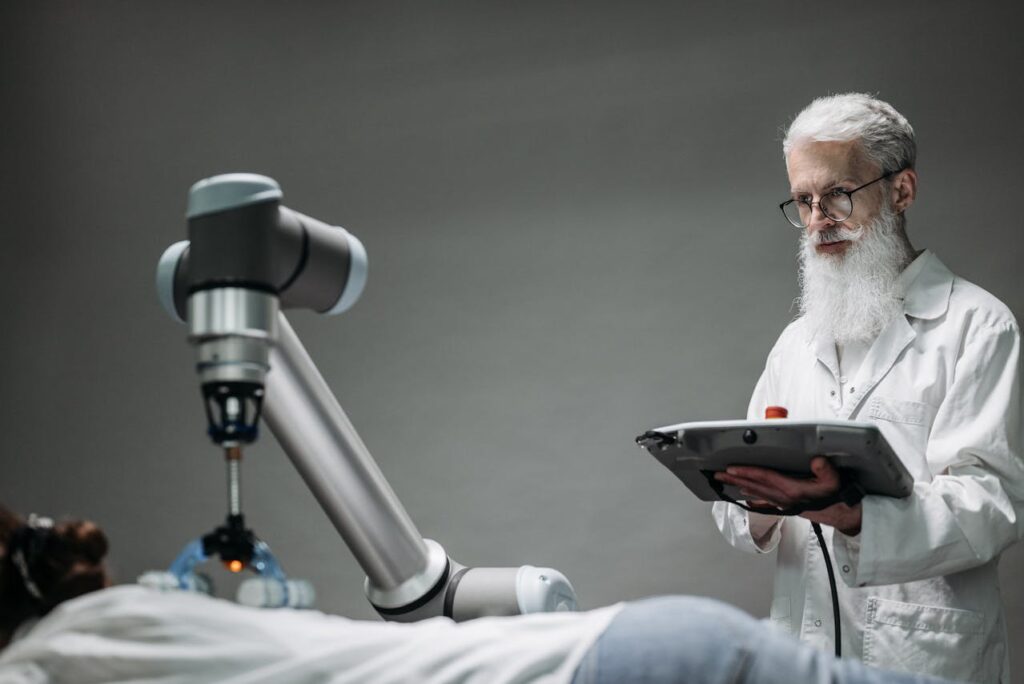
AI-assisted robotic systems are supporting surgeons during complex procedures. These technologies improve precision and reduce recovery times.
Benefits of Robotic Surgery
- Smaller incisions
- Greater surgical accuracy
- Reduced pain and bleeding
- Faster patient recovery
- Lower risk of complications
AI-powered robotics are becoming an important part of modern healthcare systems.
Challenges of Artificial Intelligence in Healthcare
Although AI offers many benefits, there are still challenges to address.
Major Concerns
- Patient data privacy
- Cybersecurity risks
- High implementation costs
- Ethical concerns
- Dependence on technology
Healthcare organizations must balance innovation with patient safety and ethical responsibility.
The Future of AI in Healthcare
The future of healthcare will likely involve even more advanced AI technologies. Experts predict AI will continue improving:
- Early disease detection
- Predictive healthcare
- Mental health support
- Telemedicine services
- Medical robotics
- Healthcare accessibility
As technology evolves, AI could make healthcare faster, smarter, and more affordable worldwide.
Benefits of Artificial Intelligence in Healthcare
Artificial intelligence is transforming healthcare by providing:
- Faster diagnoses
- More accurate treatments
- Improved patient care
- Lower healthcare costs
- Better hospital efficiency
- Enhanced medical research
These advancements are helping healthcare systems serve patients more effectively.
Conclusion
Artificial intelligence is transforming healthcare in powerful ways. From disease detection and personalized medicine to robotic surgery and virtual assistants, AI technologies are improving patient outcomes and changing the future of medicine.
As healthcare continues to evolve in 2026, AI will likely become even more important in creating efficient, accessible, and innovative medical systems worldwide.
SEO Meta Description
Discover how artificial intelligence is transforming healthcare through faster diagnosis, personalized treatment, robotic surgery, and advanced medical research in 2026.