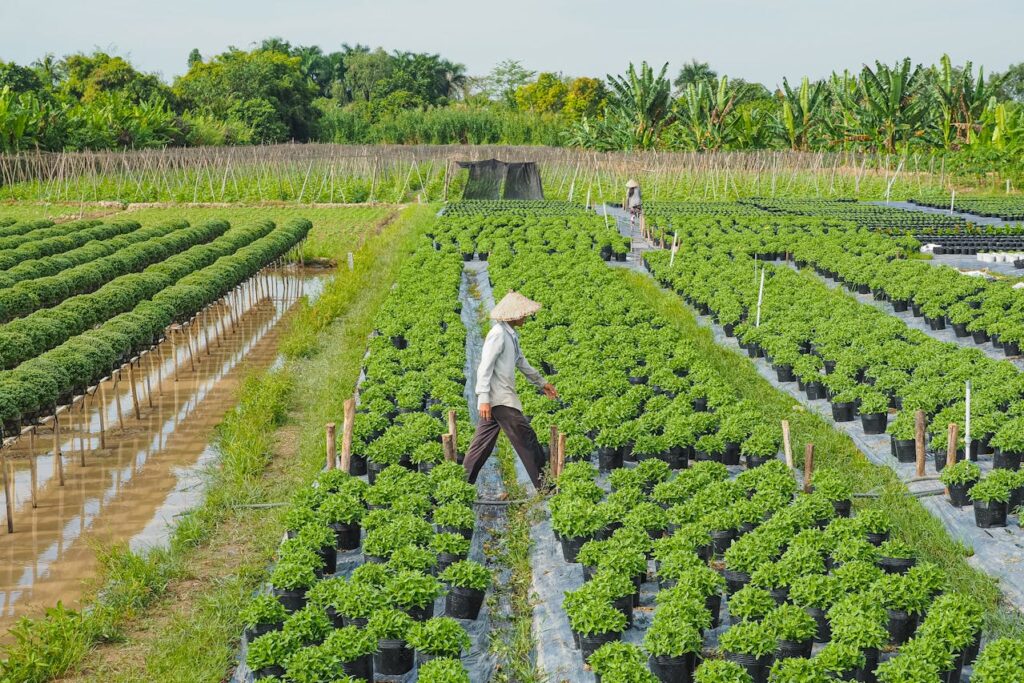
1. The Principle of Grassroots Organization
Extension work must start where the people are. Programs are most successful when they begin with the local community’s current knowledge and resources. By focusing on the “grassroots” level, extension agents ensure that the solutions provided are culturally acceptable and physically possible for the farmer to execute.
2. The Principle of Interest and Need
To boost farm productivity, the extension program must address the actual needs of the farmer. If a farmer is struggling with soil acidity, a lecture on drone technology won’t be helpful. Effective extension focuses on the farmer’s immediate “felt needs,” ensuring high engagement and immediate application.
3. The Principle of Learning by Doing
Farmers are practical learners. One of the most vital principles of agricultural extension is “seeing is believing.” Result demonstrations—where a farmer can see a new crop variety growing better than the old one—and method demonstrations—where they physically practice a new grafting technique—are far more effective than written manuals.
4. The Principle of Participation
Agricultural extension is a two-way street. It is not just a teacher-student relationship; it is a partnership. When farmers participate in the planning and decision-making process of an extension program, they take ownership of the results, leading to a higher rate of long-term adoption.
5. The Principle of Adaptability and Flexibility
Agriculture is unpredictable. A rigid extension program cannot survive a sudden drought or a market crash. Extension services must be flexible enough to pivot their advice based on changing environmental, social, or economic conditions to protect the farmer’s livelihood.
6. The Principle of Leadership
Extension identifies and trains “lead farmers” within a community. People are more likely to trust a neighbor than an outside expert. By empowering local leaders, extension services create a multiplier effect, spreading productivity-boosting techniques rapidly through peer-to-peer learning.
7. The Principle of the Whole-Family Approach
In many rural communities, farming is a family enterprise. An effective extension program doesn’t just target the “head of the household.” It includes women and youth, ensuring that every member of the family understands the new practices, which leads to more sustainable improvements in farm productivity.